Taking on new clients
Contact: info@nelstravels.com
p o r t f o l i o s a m p l e a n d c l i e n t t e s t i m o n i a l :
P A S T P R O J E C T :
Solukhumbu Buddhist Sanctuary
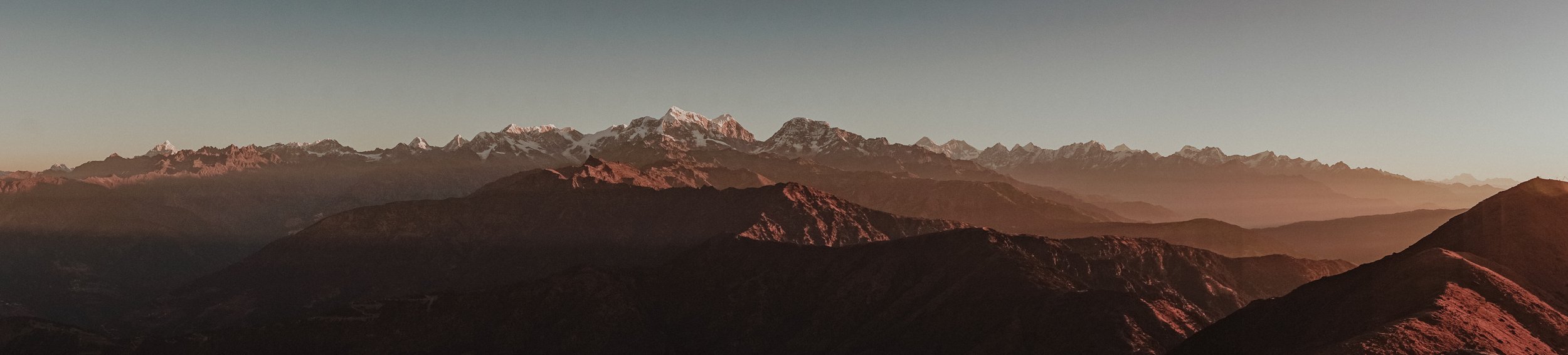
Brief: Providing photographic documentation, scouting reports, a blog post, and marketing copy for a 16-day ‘explorer tour’ packaged as a group expedition in off-beat Himalayan Nepal that includes an impact project for Tibetan exile monasteries in the region.
Client: European travel agency that specializes in sustainable and responsible tourism via impact-oriented, active adventures.
Audience: Singles or couples in the 30+ range seeking expert-curated, adventure travel experiences that are both climate-positive and socially responsible.
C L I E N T T E S T I M O N I A L
(client and project names have been removed for privacy)
“Mr Matthew David Nelson has been working with [client] company in Austria since 2021.
[Client] is a leading agency for the development and sustainable management of sustainable tourism projects, with a focus on long-distance hiking and cycle trails.
With his professional and creative work, Mr Matthew Nelson has contributed significantly to the success of these projects. The [Product A] Trail was honoured with the ‘International Tourism Award’ at the ‘World Travel Market’ in London in 2022, and his work on the [Product A] and [Product B] projects was published in National Geographic Traveler Magazine.
We can not only recommend Mr Matthew Nelson as an outstanding photographer and copywriter, but we can also emphasise his great character and his team spirit.
For the [client],
G.M.
Co-Founder & CEO“
P R O D U C T C O P Y A N D B L O G P O S T
Photographs and copy by Matthew David Nelson

Sunrise from Pikey Peak
Stage 2: Yak Kharka (3100m) - Pikey Base Camp (3750m)
(9.5km/3.5 hours) Difficulty: Moderate
Beginning from your campsite in a tranquil yak pasture, this stage seems to climb constantly; its steepness is matched only by the sheer beauty of the rhododendron and hemlock forest through which you pass. Your first break in the forest reveals a compelling vista of the Great Himalayan Range, including Everest, and several of the world’s most formidable peaks. After continuing upward, you leave the forest altogether and find an exposed ridge leading to Pikey Peak, which you will summit tomorrow. After two days of steady altitude gains, you’ll find your reward in a warm meal around the woodstove of a village homestay, and enjoy a spectacular sunset above the clouds.

Mt Machhapuchare in the dawn

Novice monks contemplating a fresco depicting samsara at Chiwang Gompa
Stage 3: Pikey Base Camp (3750m) - Junbesi (2700m)
(15km/4-5 hours) Difficulty: Moderate
If blessed with clear skies, you’ll trek briskly under falling stars to the summit of Pikey Peak for an unforgettable sunrise. With a panorama of dozens of mighty Himalayan peaks before you (several of which are above 8,000 meters), your eyes will glimpse a horizon unmatched by any in the world - including eight of the ten tallest mountains on Earth. Descend sharply through unbroken old-growth forest into an enchanting valley of rippling creeks, lush meadows, and quaint homesteads on your way to Junbesi, the sacred heart of Tibetan Buddhism in the Solukhumbu.
Stage 4: Rest/Cultural day in Junbesi (2700m)
Difficulty: Relaxed to Moderate
Several options await you in Junbesi, the largest enclave of Tibetan Buddhism in the Solukhumbu. Whether you want to trek further up the Mopung valley, visit the various monasteries, or rest and recover from previous days, your guides are there to help you make the most out of your time here.
Junbesi comfortably boasts neat guesthouses and sunny, organic gardens and vegetable patches. The village has various shops for restocking supplies/calories for the trail, a snooker room boasting a gorgeous table, a health post, a police station, a school, and at least a dozen well-appointed lodges with all the creature comforts a Himalayan trekker could require.
Some options for your day are as follows:
Hike to Thubten Choling monastery, the largest in the Solukhumbu, located within a sprawling monastic compound on a hillside above Junbesi. Prior to the COVID-19 pandemic, this monastery was home to upwards of 400 monks, many of whom are Tibetan exiles.
Tashi Thongmon monastery, just 5 minutes up from the school in the village center. Founded in 1636, this is the second oldest monastery in the Solukhumbu. Here you will find a very inviting atmosphere and are welcome to attend morning or evening puja (ceremonies), offer a khata (fabric scarf traditionally used in Tibetan Buddhism as a gift or blessing for good luck) and some incense and donation, as well as take photos.
Serlo Monastery, just outside of Junbesi. It is an important center of Tibetan Buddhist thought and learning, and boasts 70 students, 5-10 lamas, and a tulku (recognized reincarnate lama) Rinpoche (“precious one”, often in reference to a religious teacher). If you are fortunate, you may be invited in for Tibetan tea with the monks, and potentially even to receive a blessing from the Rinpoche in person.
Rest and relax in preparation for the hardest stage of the trail that is to follow.

A breakfast of traditional Sherpa noodle soup awaits you in this homestay in Taktor village
B L O G P O S T E X C E R P T
Sunrise with Sherpas, by Matthew David Nelson, for [Client] Blog:
“A second shooting star glowed above me as I continued to climb in the howling wind toward the summit. The Sherpas were just a short distance behind me: Mingma, our guide, and our porters, Lakpa and Ongchu, who carried all of our food and cooking and camping gear for the nights in the Himalayan wilderness. Even with all my layers, the wind bit into my bones, and I marched breathlessly forward on stone steps on an icy morning. Hundreds of prayer flags waved fiercely as I arrived at the mountaintop, and I was soon joined by my companions. Soon we put down our packs and waited for sunrise from the only peak on earth from which you can see eight of the 14 highest mountains on earth: Everest, Kanchenjunga, Lhotse, Makalu, Dhaulagiri, Manaslu, Cho Oyu, and Annapurna. After a glorious sunrise, the Sherpas hung a few more strands of prayer flags from the colorful cairn to send prayers and peace to the far corners of the earth in these relentless winds. Then we looked into the golden distance, trying to sense a trace of our way to Shangri-La, to the sacred lake of Dudh Kunda. We began our descent from Pikey (pronounced “Pe-Kay”) Peak, trading the stars of our ascent for the distant warmth of a December sun.
….
The [Product] Trail is aptly named, for it leads one through a veritable Tibetan Buddhism Sanctuary, providing close contemplation of monasteries full of character, unfrequented enough by visitors to the point where they notice and welcome you warmly. Where else can you personally meet a Rinpoche? Or look upon a true city of exile monks spread across a mountainside? For these reasons, many of the other trekkers you’ll come across (if any) will be pilgrims. You trek through authentic Sherpa villages, in valleys where the workers are out in the fields, the food is all locally grown, and the commercialized guesthouses are few and far between.
If the above reasons aren’t appealing enough, the wild and stunning landscapes seen on this trail alone are more than enough reason to bring me back to this region. Aside from the breathtaking and ineffable views from Pikey Peak and Dudh Kunda, you will encounter hour upon hour of blissful trekking along rugged ridges; enchanted, old-growth rhododendron forests that seem like they’re right out of a Tolkien tale; and stunning, seemingly secret valleys with rippling streams and golden pastures.
This trek is something I would highly recommend to a veteran traveler of Nepal. If you’ve gotten a few of the established treks under your belt, you’ve certainly established a foundational understanding of Himalayan culture and trekking to elevate your trekking to a more profound level with this experience that to me seemed as close to “authentic adventure” as I’ve ever felt before. In the Solu, there are many paths open to you between the main destinations of this trek, and so if you book an explorer tour, you’ll likely find yourself on hours’ worth of paths that our expedition had not trodden.
I know for certain that I’ll return to the Buddhism Sanctuary, as there are depths to it that I know will reveal new secrets to me upon each visit. And even as I write this, I feel the call to return to those paths and reenter the dream world that lies within the soul of the Solukhumbu.”
C O N T A C T
If you would like to engage Matthew David Nelson for either copywriting or photography project work, please reach out via email:
info@nelstravels.com
you can subscribe to his substack newsletter here